India now has over 114 million active credit cards — and millions of users are silently drowning in debt they didn’t see coming. Roughly 13% of users pay only the minimum balance every month, unknowingly paying up to 53% interest annually on their rolling balance. The ++RBI has flagged rising borrower stress++ as a serious concern for Indian households. If you’re feeling trapped, here’s exactly what to do.
Why Credit Card Debt Spins Out of Control
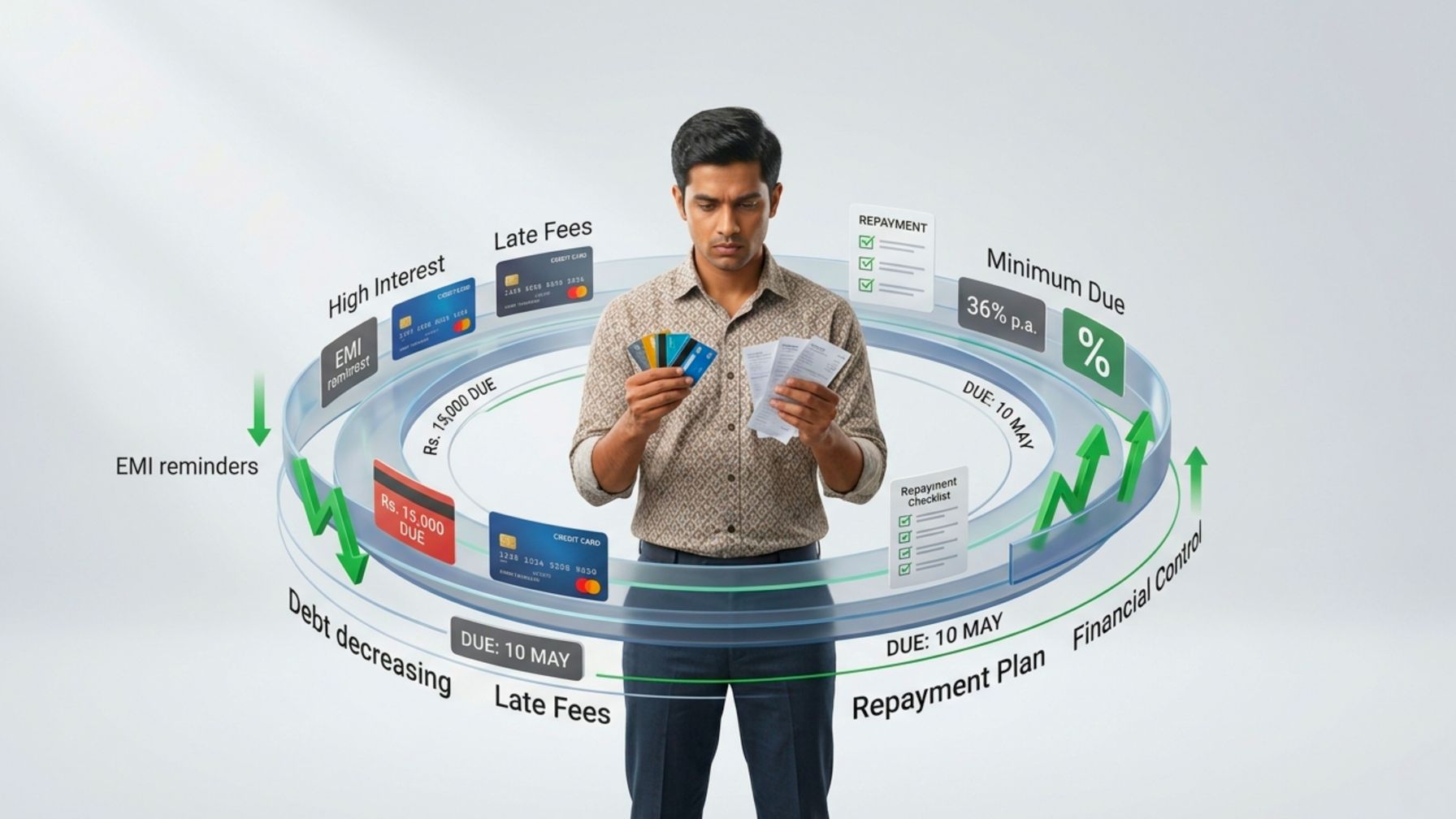
The minimum due trap is the #1 reason people never escape. Paying ₹500 on a ₹20,000 bill feels manageable, but the remaining balance compounds at upwards of 30% per annum, one of the highest interest rates in personal finance. Add late fees, annual charges, and impulse spending, and the debt doubles before you realise it.
Many Indians today are caught in the ++EMI culture and credit card lifestyle trap++ normalising debt for everything from groceries to gadgets, without realising the long-term financial damage it causes.
According to RBI’s Financial Stability Report, nearly half of credit card borrowers also carry other live retail loans, housing or vehiclemaking defaults far more damaging to their overall financial health.
Step-by-Step: How to Take Back Control
1. List Every Card and What You Owe Write down the outstanding balance, interest rate, minimum due, and due date for every card. Clarity is the first step toward any debt-free plan.
2. Use the Avalanche Method Pay off the card with the highest interest rate first while paying the minimum on all others. This cuts the total interest you pay significantly over time.
3. Never Pay Only the Minimum Always pay more than the minimum due. If you can’t, at least ensure minimum payments go out on all cards on time to avoid late fees, penalty interest, and account suspension.
4. Consider a Balance Transfer A balance transfer moves your debt to a card with a zero introductory rate — typically valid for 12 to 18 months — giving you a window to pay down the principal faster without heavy interest piling up.
5. Convert Outstanding Debt to EMI Converting your credit card outstanding to an EMI plan carries a significantly lower interest rate than revolving credit. It also gives you a fixed repayment timeline, making monthly budgeting easier and more predictable.
6. Stop Using the Card Immediately Once you are in debt, stop adding to it. Switch to UPI or debit for daily expenses until the balance is fully cleared.
When to Seek Professional Help
If you have missed multiple payments, are receiving recovery calls, or owe across three or more cards, it is time to act before the situation escalates legally or affects your CIBIL score permanently.
The share of ++credit card users missing payments for over 90 days rose to 15% in March 2025++, up from 12.5% the previous year. You are not alone, and there are structured options available to help you close this debt on terms you can afford.
If you are stuck in an ++EMI spiral and credit card lifestyle trap++, taking action early makes a significant difference. Many people who settle their debt also worry about what comes next, read our detailed guide on ++how to rebuild your life after loan settlement++ to understand the road to financial recovery.
When repayment feels impossible on your own, ++speaking to a debt resolution expert++ is the smartest move you can make. At Expertt, we have helped thousands of Indians negotiate structured settlements with lenders and stop illegal recovery harassment, so you can move forward with peace of mind.
Conclusion
Debt does not have to define you. With the right strategy, or the right help, you can master your credit card debt before it masters you. The first step is always awareness. The next step is action.